
A move to gut Head Start standards
In 2004, as a social worker serving families in deep poverty, I started a diaper bank because many of my clients were unable to afford enough diapers to keep their babies dry and healthy. It was a no-brainer. Head Start already required programs to provide diapers for enrolled children.
This gold-standard early childhood program’s regulations included many small but essential items to be in stock for children. This is because long before President Lyndon Johnson established Head Start, he was a young teacher in a Texas border town where families could not afford basic necessities. He wrote his mother heartfelt letters asking her to send toothpaste and toothbrushes for his students.
A proposed federal rule would reduce Head Start’s requirements from 133 pages to about a dozen. That’s not a move to trim red tape but to slash basic standards. No diapers, no formula, no toothbrushes, no class size or staffing ratio requirements.
This follows earlier Department of Government Efficiency (DOGE) cuts that have led to closure of some regional offices. Head Start was one of Johnson’s “Great Society” programs, along with Medicare, Medicaid and what we now know as SNAP (Supplemental Nutritional Assistance Program).
When I was growing up in the 1960s and 70s, a bipartisan majority in our government believed that all Americans benefitted from a strong social fabric. This was woven of help for seniors who could not afford their doctor bills or workers who had trouble putting food on the table after a factory closure. Nobody wanted to live in a society plagued by anxiety, where one piece of bad luck could cause a downward spiral. We wanted to be able to raise our families in vibrant communities, with parks and libraries, and send them to college, obtainable to working families through student loans.
There was no shortage of exclusion, injustice or want in these years, but there was some recognition that we needed to conquer these evils because Americans shared a common destiny. If some other family’s children were denied the opportunity to thrive, it threatened our common prosperity.
Today all the programs I grew up with that wove a strong social fabric are under attack. The National Diaper Bank Network (NDBN), more than 300 nonprofit basic needs banks across the country, is seeing requests for help reach an all-time high, even exceeding what we faced during Covid.
When Covid-19 was rampant, I was so proud of how NDBN members rose to the moment by organizing drive-through pick-ups for families and expanding to serve people who had never needed to ask for help before. A pandemic, this country can survive. But we will not survive the loss of community, the denial that we all have an interest in making sure that everyone in our society can thrive.
Let me tell you about “Sophia,” the client who convinced me to start a diaper bank in New Haven. I saw her dump the solids out of a diaper and put it back on her baby. I tried not to show my shock and calmly explained that a baby needed a fresh diaper with every change to stay healthy. Sophia told me should could not afford a new diaper every time.
I assumed that there was some government program to pay for diapers, but then, as now, that was not the case. She couldn’t use cloth because she had no washing machine, and the coin laundry would not let her wash diapers. To make matters worse, Sophia’s cash assistance relied on her going to job training. She got a voucher for free child care to facilitate this, but the provider required parents to buy diapers for use while the babies were in care. Sophia couldn’t. She was falling through a gaping hole in the social fabric and at risk of losing the few dollars she got to pay her rent.
Her story, sadly, is far from unique. NDBN research shows that nearly half of young U.S. families struggle to afford the diapers that their children need. Most of the families that NDBN diaper banks serve include working adults, but average pay has not kept pace with expenses. It’s a rigged system that profits those at the top, creates misery at the bottom, and hurts the vast majority of Americans.
Research shows that when children receive diapers they have fewer pediatric sick visits, creating savings for Medicaid. Giving families diapers protects their access to child care, allowing parents to work more hours and attend school more consistently. Family income rises and so does the amount that the household contributes through taxes. Diapers are also a low-cost intervention to address the maternal mental health crisis. Moms report that diaper insecurity is more stressful to them than food insecurity.
I could go on at length about the social good that arises from the simple act of helping families out with diapers. I encourage people to comment on the disastrous rule proposal to gut Head Start, which we can do through October 6.
More basically, I urge you to speak up about the kind of society you want to live in. In a truly great society, every child has the opportunity to thrive.
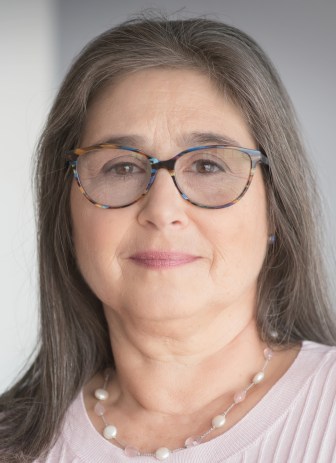
Joanne Samuel Goldblum is the CEO at The National Diaper Bank Network in New Haven.
Courtesy of CT Mirror
Keywords
CT Viewpoints


