
As flooding increases and federal aid shrinks, Vermont is not prepared to manage disaster recovery


This story is part of The Coming Storm, a yearlong investigation by VTDigger, in partnership with FRONTLINE (PBS), into Vermont’s ability to help communities recover from natural disasters.
BARRE CITY, VT — Shayd Pecor loves his home, but he wants to leave. For good.
On July 10, 2023, up to nine inches of rain pummeled Vermont. Pecor and his wife, Laurie, evacuated as the water overtook their front porch.
That night, floodwaters inundated more than 130 towns across the state, killing two people, tearing through thousands of homes and destroying roads and bridges. The storm left an estimated $600 million in damage.
The next morning, the Pecors found that their kitchen appliances had floated into the living room. Their furniture, pictures and family heirlooms were ruined. During the four months it took to repair their home, the Pecors slept on their daughter’s couch, then moved into a camper.
One year to the day later, another flood came. Another four feet of water in their basement.
“When it rains, we’re on edge,” Shayd Pecor said. “It’s continuous worrying, prepping, getting clothes ready. I don’t know how many times I’ve taken my camper out of the driveway and brought it to dry ground since the ‘23 flood.”
“It’s not a matter of ‘if’ it happens, it’s ‘when’ it happens again,” he said.
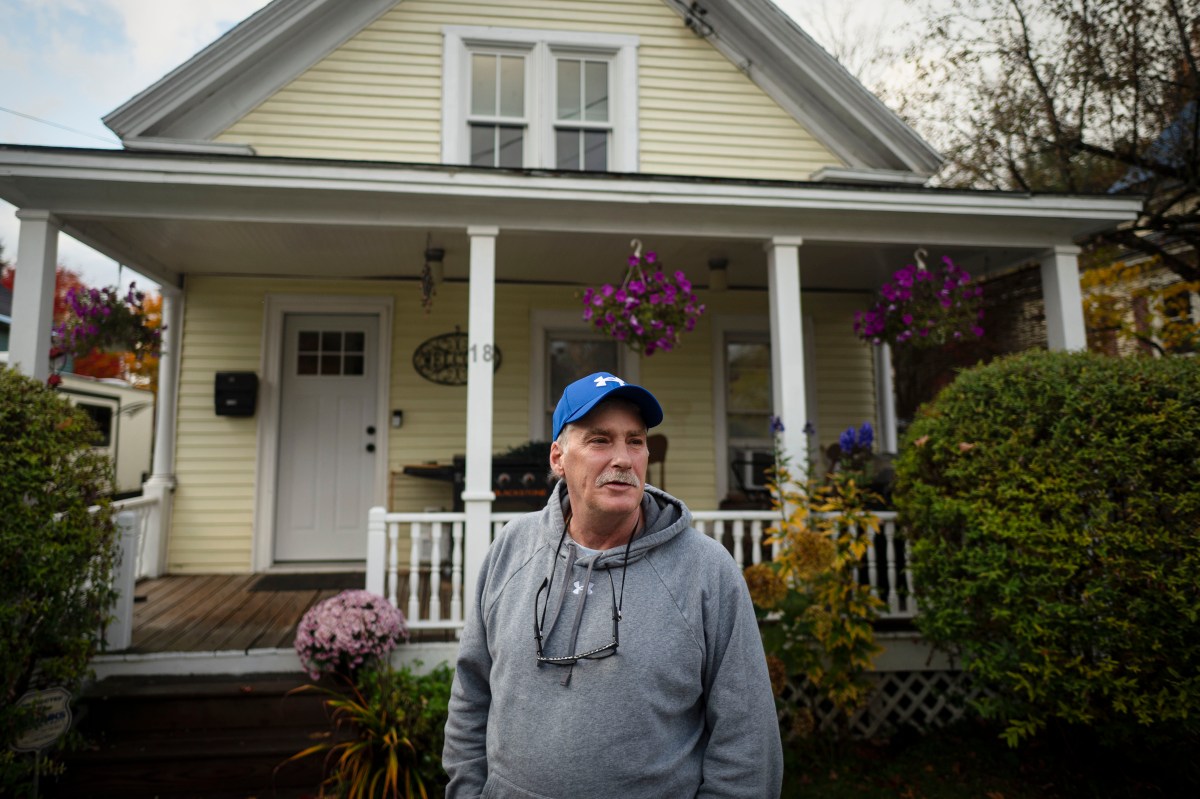
The Pecors thought they had a way out: They would apply for a “buyout” from the Federal Emergency Management Agency (FEMA), which would fund the purchase of their home at its pre-storm value if the city of Barre agreed to demolish their house and not develop the property.
The Pecors were among 67 homeowners who applied for buyouts in Barre, home to about 8,200 people. But officials there decided the city could not survive if it lost the tax revenue from all of those properties. They blocked the Pecors’ application, along with those of 39 others in flood-prone homes.
“We feel trapped,” Pecor said.
Vermont was once considered a climate haven. But average rainfall has increased 21% since 1900, repeatedly swelling the state’s more than 7000 miles of rivers, accelerating erosion – and threatening its mostly rural residents. Flood damage in the state is projected to cost billions in the next century. In the past, Vermont has relied on the federal government for disaster help – more than almost any other state.
Now, the Trump administration aims to slash disaster support, shifting more recovery responsibility to the states. But Vermont does not have a disaster reserve, or traditional county governments that can help with recovery. Most of Vermont’s towns have fewer than 5,000 people, and their annual budgets are often less than $5 million.
All this means Vermonters are facing a precarious future. Without federal aid, another massive storm could gut the state’s savings – and pose an existential threat to some communities.
If FEMA cuts aid to states, Vermont is “not going to be able to provide what we need for our people,” said Sen. Phil Baruth, president pro tempore of the state Senate. “Without putting too fine a point on it, that will mean death and destruction in my state.”
About The Coming Storm: VTDigger obtained emails from state officials regarding assistance to flood survivors, reviewed state and federal disaster funding and risk-reduction plans, examined federal proposals to change FEMA, and analyzed FEMA data on disaster aid, with assistance from Eric Sagara of Big Local News at Stanford University. VTDigger also interviewed flood survivors, frontline recovery workers, state and local officials, lawmakers, emergency management experts, scientists, and social services providers, among others, for this series.
Taking on more debt
Across Vermont, flood recovery bills have overwhelmed small town budgets.
On July 10, 2025, Jim Sullivan, the town administrator in Burke, watched anxiously as the clear afternoon skies gave way to a billowing rain cloud. Sullivan was still struggling to pay for flood damage after floods in 2023 and ‘24 when 2025 brought more flooding. The three-year flood damage total came to almost $1.6 million. The town’s annual budget is $3.3 million.
A few miles away, in neighboring Sutton, home to fewer than 1,000 people, road damage totaled $1.4 million in 2025, more than twice the town’s nearly $600,000 highway budget that year. The town clerk, Patricia McClure, and road foreman, Shane Heath, had learned the ropes in 2023, then again in 2024.

“Each year, we’ve taken out a line of credit from the bank,” McClure said. In 2023 and 2024, FEMA reimbursed them just as that line of credit was coming due.
Even with money from the state to cover some of the cost of 2025 damage, the town may need to take out a loan to pay off its existing line of credit. That could raise taxes for residents, many of them farmers and older Vermonters who live on fixed incomes.
The town of Lyndon, just six miles south of Burke, was still waiting for FEMA funds to repair damage from the 2023 floods when the July 10, 2024 storm hit.
As floodwaters poured into the town office building, the staff of four fled to a different building. They crammed into a small office to field call after call from residents whose homes or offices were flooding.
Then, another torrential rainstorm brought more flash flooding on July 30. Four houses washed away, displacing several families. By morning, two of the town’s major roads were almost completely gone.
“We’re talking in numbers that we don’t deal with,” said Justin Smith, the municipal administrator. “We had a bill a couple different weeks that was $750,000. Our highway budget, in a year, is in the $2 million range — $2.1 million, $2.5 million, depending on what we’re doing in a given year. And we’re seeing bills, absolutely legitimate, but close to half of our annual budget range in a week.”

Lyndon started borrowing money. First, it took out a $8 million line of credit, then another $6.8 million from one bank. But the town still needed more money. It turned to the Vermont Bond Bank, which was created by the state to help local governments finance projects, for additional funding. By September 2026, the town was still repairing damage, and Smith estimates it will have spent about $20 million in total.
When the 2024 flood hit, FEMA asked Smith what the town needed.
“You can get me some money coming, because we are out,” he recalled telling the agency.
As of September, Lyndon was still waiting for FEMA to reimburse more than $13 million that it has already spent to repair roads.
Without outside aid, towns can either take on more debt when disaster strikes, potentially risking bankruptcy, or allow public infrastructure to deteriorate. That leads to “a town with worse public services, worse infrastructure, likely causing population drain as a result,” said Tatyana Deryugina, an associate professor of finance at the University of Illinois at Urbana-Champaign who studies environmental risk.
“Do more with less”
Vermont’s small towns have often faced funding gaps following natural disasters. But in past federally declared floods, FEMA has filled those gaps.
In 2025, for the first time, the federal aid never came.
President Donald J. Trump denied Republican Gov. Phil Scott’s request for a Major Disaster Declaration, saying that aid was “not warranted.” The president makes the final decision on all declarations, and none are guaranteed.
In his second term, Pres. Trump has denied more disaster requests from states that voted against him in 2024 – such as Vermont – than from states that voted for him, according to an analysis by the Associated Press.
FEMA declined an interview with VTDigger for this series and did not fulfill a Freedom of Information Act request for details about the federal government’s decision to deny Vermont’s major disaster declaration for July 2025 flooding.
In an emailed statement from an unnamed spokesperson, FEMA said that the agency has sent almost $20 million in funding through the agency’s Hazard Mitigation Grant Program and more than $160 million in public assistance to Vermont since January 2025, when Trump took office. But those funds were unlocked when President Joseph R. Biden issued disaster declarations.
“FEMA remains committed to supporting survivors of the Vermont (sic) and to the locally executed, state managed, and federally supported approach to disaster recovery,” the statement said.
Last November, the governor appealed the Trump administration’s decision, and in his request, he included written pleas from town officials.
“Vermont is not an easy place to live, but it’s our home,” Sullivan, Burke’s town administrator, wrote. “It’s hard to earn a living and many of us have to farm, log, mill, hunt, and barter our trades to make ends meet and feed our families. The disaster we had this past July 10, 2025, has cost our town about $300,000.00 so far just for the roads and bridges. Without FEMA assistance that additional tax burden is going to hit our residence (sic) hard. Especially our seniors, farmers and single parents.”

The 2025 flooding hit towns like Burke that were least equipped to deal with FEMA’s retreat. The town is in Vermont’s Northeast Kingdom, where poverty rates are the highest in the state.
Without FEMA funds after the 2023 and 2024 floods, Sullivan said, Burke would have been “a bankrupt town.” He’s watched residents count out change to pay their taxes.
The Trump administration has long been planning to shrink FEMA and require state and local governments to manage and pay for more disaster relief.
Soon after he took office in January 2025, Trump issued an executive order, forming a council to conduct “a full-scale review” of FEMA.
“We’re looking at the whole concept of FEMA,” Trump said in January 2025. “I like, frankly, the concept when North Carolina gets hit, the governor takes care of it. When Florida gets hit, the governor takes care of it, meaning the state takes care of it.”
The notion of gutting the agency drew ire from critics including U.S. Sen. Bernie Sanders, I-Vt.
“Clearly, we need to protect FEMA,” he told reporters in July 2025. “The idea of dismantling FEMA, or cutting back, at a time when communities are going to see more and more flooding and other types of disasters, is a terrible mistake.”
In May 2026, Trump’s council recommended in its final report that federal assistance only be used “for truly significant events,” and states can and should pay more for disaster recovery.
“It is time to close the chapter on FEMA,” the council wrote. It proposed creating a new agency that included existing programs with “a proven track record of effective federal-state-local partnership” while giving states direct funding and more responsibility to distribute it.
The proposals have a long road to becoming real, permanent changes to FEMA. Many of the proposals are not specific, and so far, Congress has not altered the Stafford Act, which governs how disaster aid is distributed.
But they all point in the same direction, said Eric Forand, director of Vermont Emergency Management: “The states have to do more with less.”
Sue Minter, Vermont’s chief recovery officer after Tropical Storm Irene in 2011, watched federal money pour into the state to fund all aspects of recovery in the wake of that disaster.
“I’m very alarmed by the possibility that FEMA may reduce its commitment to funding responses to disasters,” she said. “I know full well that those who will be most hurt and aggrieved by this are those least able to manage.”
Without those federal dollars, the state is “so, so facing crisis,” she said.
No disaster reserve
Experts say Vermont could not cover the cost of a large disaster without federal aid.
The state doesn’t have enough money in its reserves — its savings account — to pay the bills for most storms. Vermont’s reserves are about equal to the cost of one large storm, which makes it the most financially vulnerable state in the country to swings in federal disaster aid, according to a 2025 report from The Pew Charitable Trusts.
Vermont’s budget is $9.4 billion, and as of 2025, it had a little over $300 million in its reserves. State officials estimate the final damage tally from the 2023 flood to be around $600 million.
It’s not only the large disasters that concern state emergency management officials. Historically, Vermont has received federal aid for smaller disasters.
That’s because the threshold to unlock FEMA aid for the most expensive recovery projects — repairs to roads and bridges — is calculated based on a state’s population. With some 645,000 residents, Vermont can qualify for aid when storm damage exceeds $1.2 million. (For comparison, California, with its 39.4 million residents, has a threshold of about $76 million.)
“Towns have lower budgets because they have a lower amount of taxpayers, which means that a road washout that’s $100,000 is much more significant in Sutton than it is in, you know, New York City or a larger place, like the suburbs of Massachusetts,” said Forand, Vermont’s top emergency management official.
The Trump administration wants to raise that threshold. Last year, Cameron Hamilton, who is now the FEMA administrator, proposed quadrupling the current threshold for all states. Under that plan, Vermont’s threshold would be $5 million.
Earlier this year, the FEMA council pitched a smaller increase, which would raise Vermont’s threshold to around $2 million.
In addition to the higher threshold, the council also recommended that states pay a minimum amount, like a deductible, before federal aid kicks in, but did not specify how much it should be. Even a relatively small deductible could have a big impact on Vermont, making the majority of disasters in the state ineligible for any federal disaster aid. Since 2002, 53% of Vermont’s disasters have cost less than $5 million, and 79% have cost less than $10 million, a VTDigger analysis of FEMA data shows.
Congress will have to weigh in on many of the council’s plans. But the proposals would “reduce the amount of money that community, state, and local government would be eligible to receive from FEMA post disaster, with no indication for how states and locals might be expected to make up for that loss of funding,” said Samantha Montano, associate professor of emergency management at Massachusetts Maritime Academy.
In October, Hamilton said states should prepare to take on more of the recovery cost.
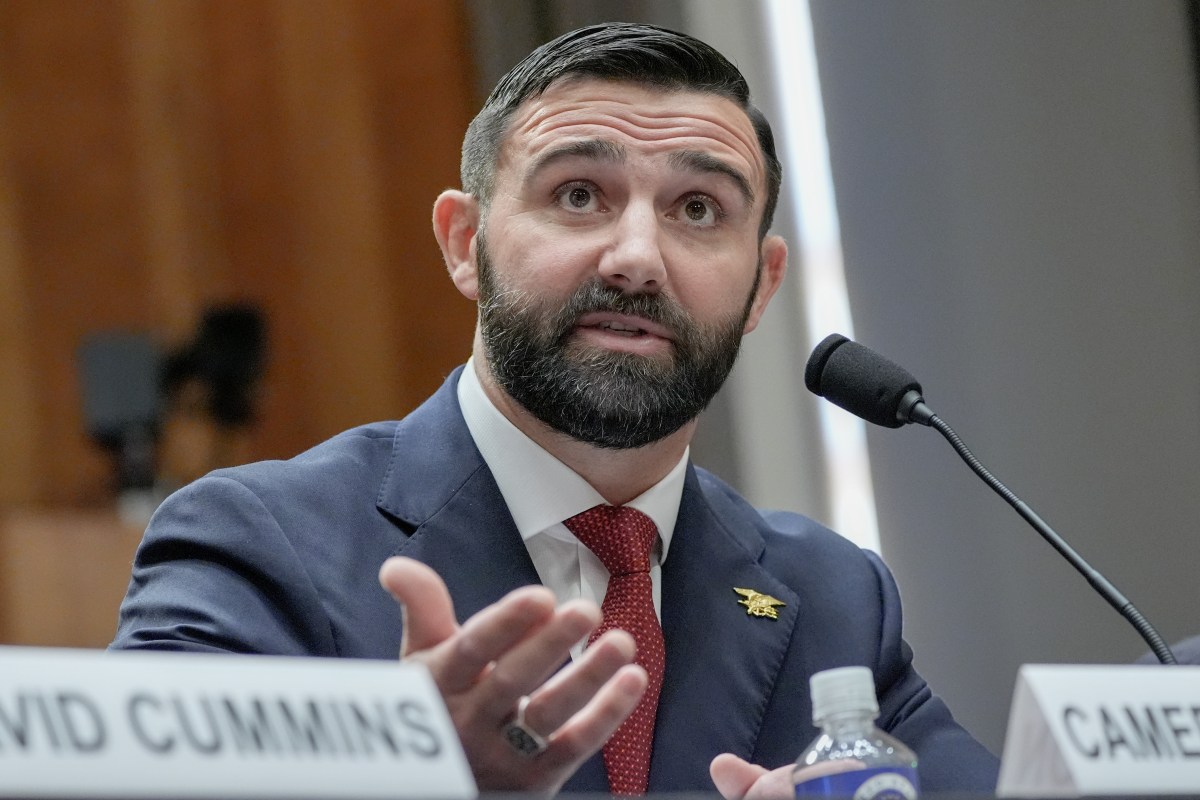
“What I would tell states is that, if there’s concern over whether they’re able to have the financial resources able to meet that mission space, we’d like to see them invest early,” he said in an Oct. 19 interview with Spectrum News.
U.S. Senator Peter Welch (D-Vt.) issued a press statement after POLITICO reported that Hamilton, at a private conference in Arkansas, told state officials to increase their reserves and prepare to receive less federal help.
“Vermont’s catastrophic floods of 2023 and 2024 would have been impossible to recover from without the immediate, lifesaving response efforts provided by FEMA,” Welch said. “I have no doubt our next flood or natural disaster will be harder to recover from because of President Trump’s misguided, reckless policies.”
FEMA’s decision not to help after the 2025 floods offers a glimpse into what may be coming. The state sustained more than $1.8 million in damage, which would have been enough to trigger FEMA aid in previous administrations. The denial left the towns desperate for alternative funding.
Gov. Scott and lawmakers eventually agreed to cover some of the damage through the state budget. Scott said that he wants “to be careful about the precedent, because once we start that, then we have to continue from a parity standpoint.”
Between 2011 and 2024, Vermont had 25 federally declared climate disasters and every county had at least five disasters. Gov. Scott and other state officials have acknowledged that they don’t have a comprehensive plan to recover from future climate disasters without federal aid.
VTDigger sent multiple requests to Gov. Scott’s office requesting an interview for this series and did not receive a response.
In an interview, Doug Farnham, Vermont’s chief recovery officer, said the state is “reacting to the individual events.”
“For each situation that comes up in the next two years, we’re going to evaluate it and respond,” he said. “If federal law changes, then Vermont needs to change its structure, but we can’t shift our structure based on the current president.”

Emergency management experts say states should create a disaster reserve to have immediate access to recovery funds.
“That is a bare minimum thing that every state should have,” Montano said.
A state task force to address reductions in federal aid called creating a disaster reserve “a clear policy priority.” But leaders across the political spectrum say Vermont cannot afford to fund it, and there is little appetite in Montpelier to raise taxes for such a reserve.
“If we were in a healthy position, that would be something that would make sense,” Farnham said. “From a macro perspective, I don’t think that disaster recovery at this point in time can take priority over things that are having a much bigger human and financial impact.”
“Should we be saving up a billion dollars in the event that we’re flooded similarly next year?” asked Baruth, Democratic president of the state Senate. “We literally don’t have that money.”


Vermont is struggling with an array of economic challenges, including a severe housing shortage that has driven up rents and home prices, especially for lower-income residents, and led to a sharp rise in homelessness. Gov. Scott, a popular Republican in one of the nation’s bluest states, has repeatedly vowed to reject any policy proposals that contain new taxes or fees.
READ MORE
Rep. Robin Scheu (D-Middlebury), the chair of the state’s House Appropriations Committee, said lawmakers should be talking with the governor about creating a disaster relief fund – “that’s a conversation that needs to happen” – but acknowledged that many voters have other priorities.
“If you talk to Vermonters, unless they’ve been impacted by the floods themselves, this doesn’t rise to the top for them,” Scheu said. “This is an election year.”
Sullivan, in Burke, says the state needs to be prepared for damaging storms that are coming “every year.”
It’s frustrating “to go through this number of disasters, and to not be hearing more about how they’re going to build a reserve,” he said.
In the absence of a disaster reserve, he’s working to ensure “that our town budget is really bare bones.”
FEMA doesn’t cover all of the flood damage costs, and the town’s portion, though a fraction of the overall bill, is still “a huge hit,” Sullivan said.
“The next year, you get whacked again,” he said. “And it’s like, we didn’t budget for that, you know? You just start sinking.”
“Save Shadow Lake”
In Glover, Theresa Perron-Janowski is selling t-shirts to fix her town’s leaking dam.


It’s been more than three years since state inspectors found a small hole, the size of a mouse, piercing the main wall of the Shadow Lake dam. A year later, more floods made the problem worse, creating a 5-foot by 5-foot sink hole. It was a “huge red flag,” she said.
Should the dam fail on the 210-acre body of water, the resulting flood could be catastrophic for the people downstream. A nursing home and senior housing both sit in the path of the river.
When Perron-Janowski started as Glover’s town administrator – a week before the 2023 flood — she didn’t know then that she’d soon be carrying the weight of the town on her shoulders.
“I was brand new to the ropes, and was waiting for somebody to tell me what to do with that,” she said. “Then, I realized, nobody’s going to tell me what to do. I got to do this myself then.”
She scrambled to organize temporary fixes, which, she said, made the dam safer. But it still needs permanent repairs, which could cost millions of dollars. She expects FEMA will cover the bulk of that. But Glover will have to pay about 18% of the cost, and there is no room for that expense in the town’s annual budget of $2.3 million.
To avoid raising taxes in her economically challenged town, Perron-Janowski has searched long and hard, with no luck, to find another source of funding. A member of Vermont’s flood recovery office has joined in her efforts, and together, they keep a long list of rejected grant applications.
Of the state’s roughly 800 dams, Shadow Lake is just one of around 150 listed as a “significant” hazard. Another 74 are considered “high” hazards.
READ MORE
Perron-Janowski has begun fundraising, holding auctions and selling t-shirts that read, “Save Shadow Lake.” As of October she had raised close to $40,000, which she expects will go toward a $100,000 analysis that will map out how to do the repairs -— not fund the repairs themselves.
Perron-Janowski was 70 when she took the town administrator job three years ago.
“I took this job to get less stress,” she said with a laugh.
She thought her days would consist of managing the town recycling center and overseeing other basic services. Instead, the floods have “been consuming,” she said, and her job has been almost entirely “flood-related and FEMA-related, looking for grants, writing grants.” When she receives a donation check in the mail, she dances around the town office and often sheds a tear, she said.
Though FEMA officials have assured Perron-Janowski they’ll stick with the project, she watched in horror as her neighboring towns failed to get federal aid in 2025.
“It’s devastating. It puts the community in debt,” she said.
She often stays awake at night, fretting over the cost of the repairs. When it rains, she worries about the residents who live downstream from Shadow Lake.
Her own home sustained flood damage in 2023. She’s not sure how much longer she wants to keep working, but she plans to stay until the dam repairs are complete.
“You know, maybe you could put a little plug in your paper,” she said. “We will be looking for a town administrator, if anyone is interested.”
No county governments
Much like Glover, other small towns in Vermont struggled to retain staff with the expertise to work with federal disaster officials and manage flood recovery.
In Wheelock, two key town employees quit after consecutive July storms, leaving the volunteer selectboard chair, Ann Lawless, to become the town’s primary contact with FEMA. “You can’t run these giant projects just on volunteers,” she said. “We’ve made many mistakes because we’re volunteers.”
More than 100 miles south, in Ludlow, flooding in 2023 damaged the town’s grocery store and wastewater treatment plant. Brendan McNamara, then the town municipal manager, relied on FEMA to coordinate recovery through its Public Assistance Program Delivery Managers. But during his two-and-a-half years with the town, Ludlow had 13 different program delivery managers, McNamara said, which meant town officials had to “re-explain and reinvent the wheel every time.”

McNamara came into the job with “aspirations of moving things forward” in Ludlow. But after years of managing the aftermath of the storms, he quit in December 2025.
In many states, county governments would fill these gaps, connecting small towns in a region with a pool of resources. So when a road crumbles in one town in a county, there’s a larger bucket of money and more staff at the county level to step in and help.
READ MORE
In Vermont, regions are technically split up into counties, but they don’t have governments. Six other states have versions of county government that are roughly as limited as Vermont’s, according to the National Association of Counties.
In lieu of county government, Vermont’s has 11 regional planning commissions which were created by state law and get their funding mostly from grants, with small contributions from their member towns. They help towns with everything from economic development to housing to emergency management, and they are one of the most significant resources that exist for towns after disaster hits.
But that support varies. Some regional planning commissions have flood experts on staff and are well-poised to help towns with flood recovery. Others have fewer resources.
Experts say that Vermont has likely missed opportunities to get federal funding because of its lack of county government. A comparison of Vermont’s Covid-era federal funding to that of other New England states showed the state received a fraction of what other states with strong county governments got from the federal government.
Installing county government would be a radical shift for Vermont, where towns and cities maintain local control by relying on rituals of direct democracy. Many hold an annual Town Meeting Day where residents gather to vote on town business, often before or after a potluck. Changing this would require large-scale legislative approval.
While such a big change is unlikely, lawmakers have met in recent years to discuss forming some other regional system that could provide towns with more support. A state law created a County and Regional Governance Study Committee to look into the question. It is expected to file its report in December 2026.
If proposed changes to FEMA move forward and towns are left without help to pay for repairs from the damaging floods, an increasing number of Vermont towns may not be able to fund the basics of civic life.
Vermont’s more affluent towns are “going to be fine,” said Pete Fellows, a certified floodplain manager at Two Rivers-Ottauquechee Regional Commission in eastern Vermont. “But parts of Vermont are going to start to fall off the edge more than they have been.”
“Terrible decisions”
In Barre, city officials created a plan to purchase flooded homes directly from residents, which would remove FEMA from the equation and allow the city to keep the development rights. That way, people like the Pecors could walk away with the pre-flood value of their homes, and the city could build more housing on the land, taking measures to reduce flood risks.
The plan hasn’t worked for a familiar reason: City officials don’t have the funding.
Barre asked the state to pay for the buyouts, using money from a flood relief program. But the state rejected that proposal – twice. State officials said Barre’s plan didn’t create housing outside of the floodplain.
READ MORE
In October 2026, the state approved and funded a final application from the city. With $4.2 million, Barre plans to replace a city park with new housing and buy out two commercial buildings. The plan only included one residential buyout, which Mayor Thom Lauzon said was likely to be a home along Route 302 — not the homes of Pecor or his neighbors.
“We just feel really disappointed,” Pecor said. “We feel let down by the city government, and it’s not just me. It’s everybody I speak to on the North End, that it wasn’t taken seriously.”

Recently, Pecor turned 59. He’s been working since he was 14 years old, he said. He and his wife had planned to sell their house to fund their retirement. But that plan has evaporated.
Pecor said he wouldn’t be able to sleep if he sold his house to someone else, “knowing that it would happen to them possibly soon,” he said. “No one’s going to buy it anyway.”
Mayor Thom Lauzon said flood recovery is his biggest focus.
“Driving through Barre, there are certain areas, mostly on the North End of town, where it’s very clear that people are still struggling and trying to recover,” Lauzon said.
It wasn’t easy to deny the FEMA buyout applications, he said. But the goal of that program is to reduce the costs and risks from future flooding, not to compensate flood survivors for their losses.
The city denied 40 FEMA buyout applications, including the Pecors, but approved 27 buyouts in areas where the newly opened land would create floodplain and measurably reduce flood risk to the rest of the city.
“Their stories were just as compelling, but because we couldn’t make the case that this would benefit the city as a whole, as opposed to just that individual property owner, we had declined to buy them out,” Lauzon said. “Those were terrible decisions to make.”
This story was reported with support from FRONTLINE’s Local Journalism Initiative, which is funded by the John S. and James L Knight Foundation.
The series continues. Next in The Coming Storm: River erosion, the greatest naturally occurring threat to Vermonters, causes the vast majority of the state’s flood damage. As climate change intensifies, the problem is expected to worsen — yet solutions are complex and expensive. In the meantime, many Vermonters remain in harm’s way.
Sign up for VTDigger’s free Breaking News and Special Reports newsletter to receive the next stories when they’re published.
Read the story on VTDigger here: As flooding increases and federal aid shrinks, Vermont is not prepared to manage disaster recovery.
Courtesy of VT Digger
Keywords
Environment, Government & Politics, Barre City, Donald Trump, FEMA, floods, FRONTLINE, The Coming Storm, Thom Lauzon


